
Best Heat Press for DTF Printing: Buyer's Guide
What a DTF press must do
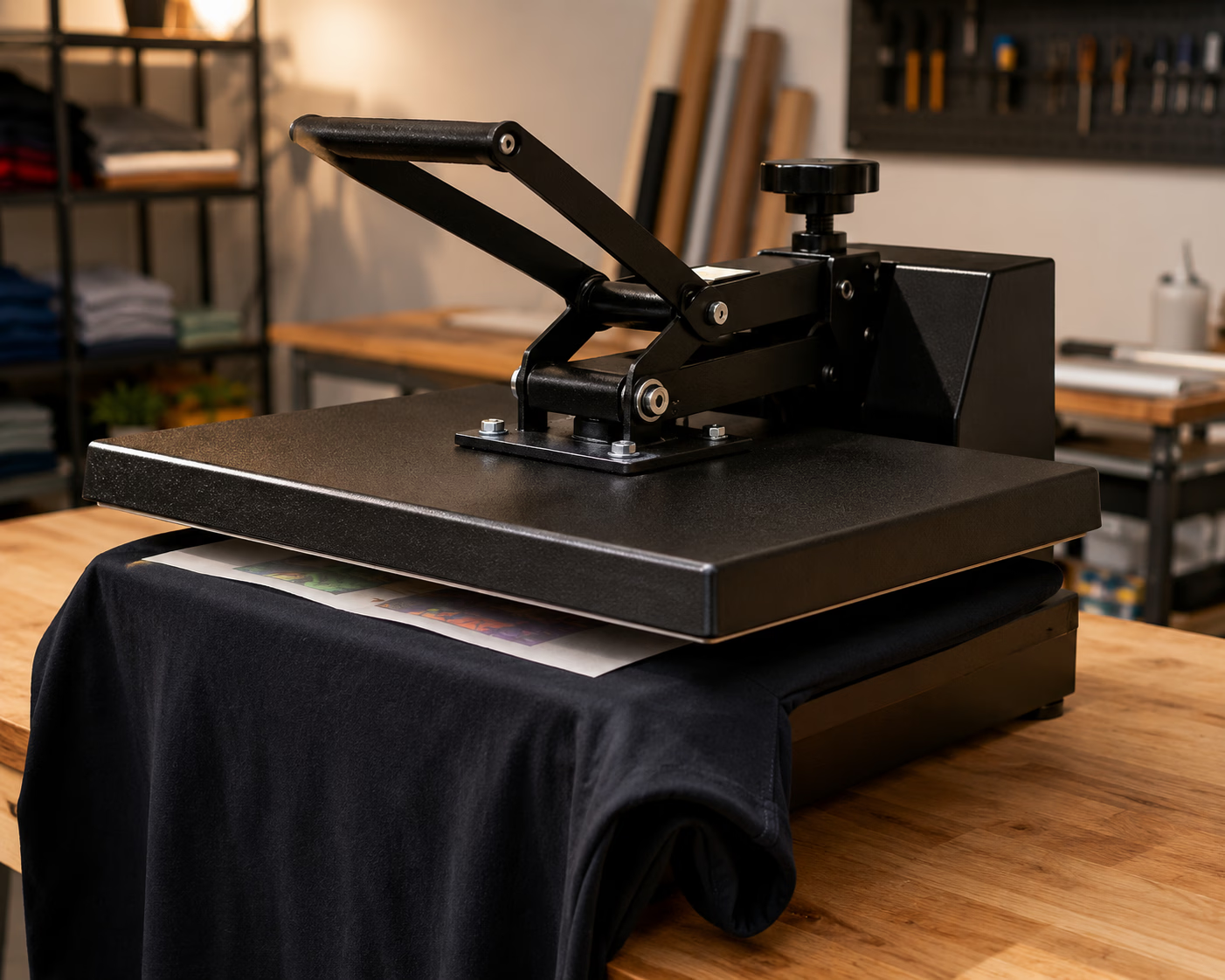
We print and ship DTF transfers; we do not sell presses. That makes this an easy guide to write honestly, because a transfer only looks as good as the press behind it. Three things matter, in this order:
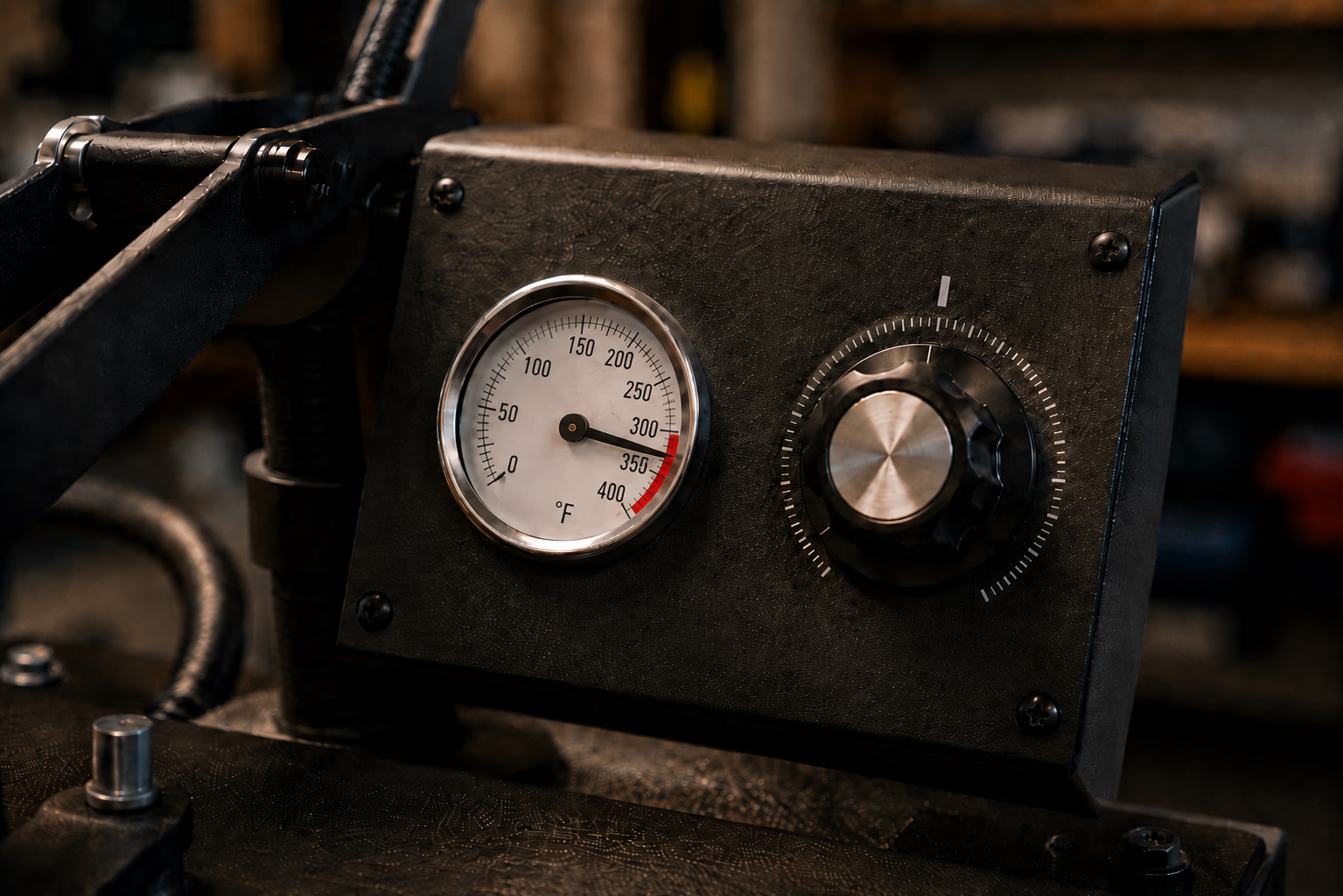
- Accurate temperature. DTF on cotton presses around 320F (160C). A press that reads 320F (160C) but actually runs 290F (143C) gives weak adhesion; one running 350F (177C) can scorch the garment. Accuracy beats every other feature on the spec sheet.
- Firm, even pressure. The adhesive needs consistent pressure across the whole design. Uneven pressure is why household irons produce patchy results on larger prints: edges lift where the pressure was light.
- Enough platen for your designs. The heated plate has to cover your largest design in one press. For most t-shirt work, a 15x15 inch platen does it.
Everything else, digital timers, auto-open, slide-out drawers, is convenience. Nice to have, but no substitute for those three.
Press types compared
Presses come in a few basic shapes, and the right one depends more on your space and volume than on any spec.
| Press type | How it works | Best for | Watch for |
|---|---|---|---|
| Clamshell | Top platen hinges down like a clamshell | Most t-shirt work; smallest footprint | Pressure can run lighter at the front edge on a worn hinge |
| Swing-away | Top platen swings aside, then presses straight down | Thick items like hoodies; very even pressure; safer layout space | Needs more bench room and swing clearance |
| EasyPress-style plate | Handheld heated plate you press by hand | Crafters, occasional projects, easy storage | Pressure depends on your arms; verify the true plate temperature |
| Hat press attachment | Curved platen shaped for caps | Hats and other curved items | Only worth it if caps are part of your lineup |
EasyPress-style plates (the Cricut EasyPress is the best-known shape) genuinely work for DTF on small and medium designs; if that is your setup, our Cricut and DTF transfers guide covers the full workflow. For a first dedicated press, a 15x15 inch clamshell is the default answer for a reason: it covers standard t-shirt designs, fits on a normal bench, and puts your budget into heat and pressure instead of size you may never use.
What size platen do you need?
Match the platen to the largest design you will actually press, not the largest you can imagine. These placements line up with our DTF transfer size chart:
| Placement | Typical design width | Platen that handles it |
|---|---|---|
| Left chest logo | About 3-4 inches | Any platen, including small craft plates |
| Sleeves, onesies, koozies | About 2-4 inches | Any platen |
| Standard full front | About 10-12 inches | 15x15 inch, with room to position |
| Full back print | Similar to a full front, sometimes larger | 15x15 inch or larger |
The platen can be bigger than the design; it cannot usefully be smaller. Pressing a large design in two overlapping passes is possible but risks visible lines where the presses meet, so if full-back prints are your bread and butter, size up.
Do you need a heat press for DTF at all?
For occasional small designs, no: a household iron or an EasyPress-style plate will apply a DTF transfer. The trade-off is consistency. An iron concentrates pressure under its soleplate and has steam holes that leave uneven contact, so larger designs are where results get patchy. A handheld plate heats evenly but leaves pressure up to you.
The moment you are pressing shirts to sell, a real press pays for itself in rejects you do not make. Pressure is repeatable, temperature is set once, and every shirt gets the same result. One practical note on handheld and auto presses: the displayed temperature often reads 10-20F (6-11C) above or below the true plate temperature, so verify with a separate thermometer before trusting a full run to it.
Settings reference
For DTF transfers, cotton presses at 320F (160C) for 15 seconds with firm pressure and a cool peel, and polyester runs cooler at 280F (138C) for 10-12 seconds. That one line is all you should take from a buyer's guide: the full detail, including pre-press, re-press and peel technique, lives in our Perfect Press temperature, time and pressure guide and the step-by-step how to apply DTF transfers walkthrough.
Common mistakes when choosing a press
- Buying on features instead of accuracy. A digital readout means nothing if the platen runs 30F (17C) off. Reviews that mention verified temperature are worth more than any feature list.
- Going too small to save money. A platen that cannot cover a full-front design forces risky two-pass pressing. Check your typical sizes against the size chart before you choose.
- Ignoring pressure adjustment. You need firm pressure you can set and repeat. A press with no adjustable pressure knob will fight you on thick seams and hoodies.
- Trusting the dial blind. Whatever you buy, verify the real platen temperature before the first run. Budget presses work for DTF if, and only if, the temperature is accurate.
- Forgetting the workspace. A swing-away needs clearance to swing; a big-platen press needs a sturdy bench. Measure before you order.