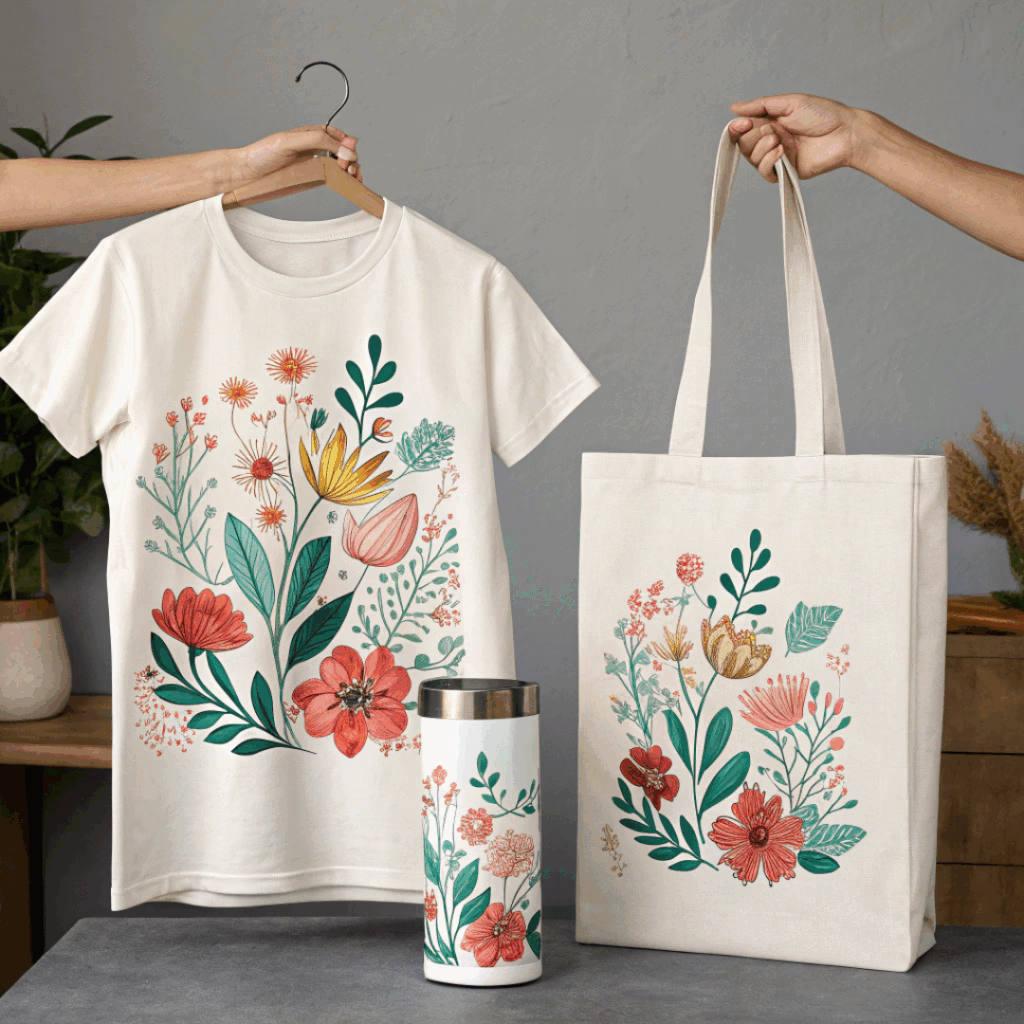
How to Start a Profitable T-Shirt Business from Home with DTF Transfers
So many crafters share the same dream: turning a beloved hobby into a thriving business. The time it takes to create each item, the confusing math of pricing, and the fear of not keeping up with orders are what hold most people back. DTF (Direct-to-Film) transfers remove the hardest parts: no weeding, no cutting machine, and no minimum order, so you can start small and scale when sales prove out. For a plain-English walkthrough of the same approach, see how to start a t-shirt business without buying a printer.
How to start a t-shirt business from home in 6 steps
Step 1: Pick your niche
The home t-shirt businesses that work pick a lane: teacher gifts, pet humor, local sports parents, faith-based designs, sarcastic mugs-and-tees. A niche makes your designs easier to find, your marketing cheaper, and your customers more loyal. You can always expand later; you cannot stand out selling everything at once.
Step 2: Get designs you have the rights to sell
Create your own artwork, or buy designs with a commercial license from marketplaces like Design Bundles. The rule that protects your business: you must own the rights or have permission from the copyright holder for every design you sell. Skip anything with trademarked characters, logos, or phrases.
Step 3: Order DTF transfers with no minimum
Upload your designs to the gang sheet builder and fit as many as you can onto one sheet. There is no minimum order, which is the key advantage when starting out: you can test five designs with a tiny budget instead of buying screen-printing quantities of each. Orders dispatch in 1-2 business days from our Kentucky facility.
Step 4: Press your first shirts
Pressing takes about two minutes per shirt: pre-press the blank, position the transfer, press at the right settings for the fabric, cool peel, re-press. The full walkthrough is in how to apply DTF transfers. No cutting machine, no weeding, no ink to manage.
Step 5: Price with the 3x rule
A reliable starting point: (cost of blank + cost of DTF transfer) x 3 = your retail price. Example: a $5 shirt plus a $3 transfer prices at $24. That covers your costs, pays for your time, and leaves a real margin. Check your numbers per design with the price calculator, then adjust to your market.
Step 6: Start selling and marketing
Start where your niche already is: craft fairs and local markets give instant feedback, Etsy and Facebook groups reach buyers searching for your theme, and social media shows off finished products. Reinvest early profits into your best sellers. The case studies below show what a single bundle of transfers can turn into.
How much does it cost to start a t-shirt business from home?
Less than most people expect, because DTF needs no printer, ink, or cutting machine. Your real startup list is short:
- A heat press. The one genuine equipment investment. A household iron works for your very first tests; a press pays for itself in consistency. What to look for is covered in best heat press for DTF.
- Blank garments. Wholesale suppliers like JiffyShirts and ShirtSpace sell single shirts for a few dollars each; buy small while you test designs.
- Transfers as you go. With no minimum order, transfers are a variable cost, not an upfront one. Price a sheet with the price calculator before you commit.
Thinking about printing transfers yourself instead? Read the honest math on owning a DTF printer first: for most home businesses, buying transfers wins until volume is high. For the case against buying too soon, see why you probably don't need a DTF printer yet.
Is a t-shirt business profitable?
It can be, and the math is simple enough to check before you start. With the 3x rule, each shirt carries roughly a two-thirds gross margin: a $5 blank plus a $3 transfer sells at $24, leaving $16 before your time and selling fees. Profitability then comes down to two things you control: picking a niche where designs sell at full price, and keeping your production time low, which is exactly what ready-to-press transfers do.
The profit playbook: real numbers from real bundles
Let's move past theory and look at the tangible profit inside a DTF bundle, using examples from our past DTF Dollar Events (sign up for text alerts here so you do not miss the next one).
Case study 1: the Christmas DTF Bundle
Imagine you bought our $70 Christmas DTF Bundle, which came packed with 38 unique holiday-themed transfers.
| Your initial investment | |
|---|---|
| Christmas DTF Bundle | $70 |
| Estimated cost of blanks (shirts, signs, ornaments, etc.) | ~$97 |
| Total investment | $167 |
After applying those 38 transfers to their respective blanks, you could sell the finished items at average market prices: custom shirts ($84), door signs ($105), ornaments ($170), and so on for all 38 items, for a total potential revenue of about $576.
Case study 2: the UV DTF Decal Bundle
Now let's look at our $70 UV DTF Decal Bundle, which included 118 individual decals for hard surfaces.
| Scenario | Investment | Potential revenue | Potential profit |
|---|---|---|---|
| A: selling the decals directly | $70 | 118 decals x $4 = $472 | Over $400 |
| B: selling finished mugs | Bundle + 118 mugs: ~$660 | 118 mugs x $14 = $1,652 | Nearly $1,000 |
Both case studies use the bundles' published contents and common market prices; your prices and sell-through will vary.
Print on demand vs pressing your own with DTF
Print on demand (a service prints and ships each order for you) means zero equipment and zero inventory, but it also means high production costs per shirt, no control over quality, and thin margins. Pressing your own with DTF flips that: your per-shirt cost stays low, quality is in your hands, and a market stall or same-day local order is possible. The honest trade-off:
| Print on demand | DTF at home | |
|---|---|---|
| Upfront cost | None | A heat press |
| Cost per shirt | High (the service's print + fulfillment) | Blank + transfer (often under $10) |
| Margin | Thin | Roughly 2/3 gross with the 3x rule |
| Quality control | The service's | Yours |
| Local / same-day sales | No | Yes |
| Scales without your labor | Yes | Until you hire help |
Many sellers start with print on demand to validate designs, then switch to pressing their own once a design proves it sells, keeping the difference as margin.
T-shirt business name ideas
Keep it short, spellable, and roomy enough to outgrow your first niche. Three patterns that work:
- Niche + maker word: Chalkboard Threads (teachers), Paw Print Press (pets), Sideline Stitch (sports parents).
- Your name + studio word: Hartley House Prints, Maple and Main Tees.
- Vibe words: Snark and Stitch, Sunday Press Co, The Cozy Tee.
Before committing, check the name is free as a domain, on your main social channel, and in your state's business registry.
The hidden cost of slow methods
Profit is not just revenue minus costs; it is also the value of your time. Every hour spent weeding vinyl is an hour not spent designing, marketing, or fulfilling three more orders. Curious how the methods compare? See DTF vs sublimation vs vinyl for the full comparison, or the wider types of t-shirt printing overview.
Your partner in profit
Starting a craft business should be exciting, not exhausting. At DTF Printer we print your transfers to order in our Kentucky facility, check every file before it prints, and dispatch in 1-2 business days with free US shipping over $75. Explore the gang sheet builder and see how easy it is to start.